Cultivated Wilderness (2026 - 2027)
Keywords: Monoculture, Domesticated Nature, Cultivated Landscapes & Ecological Transformation
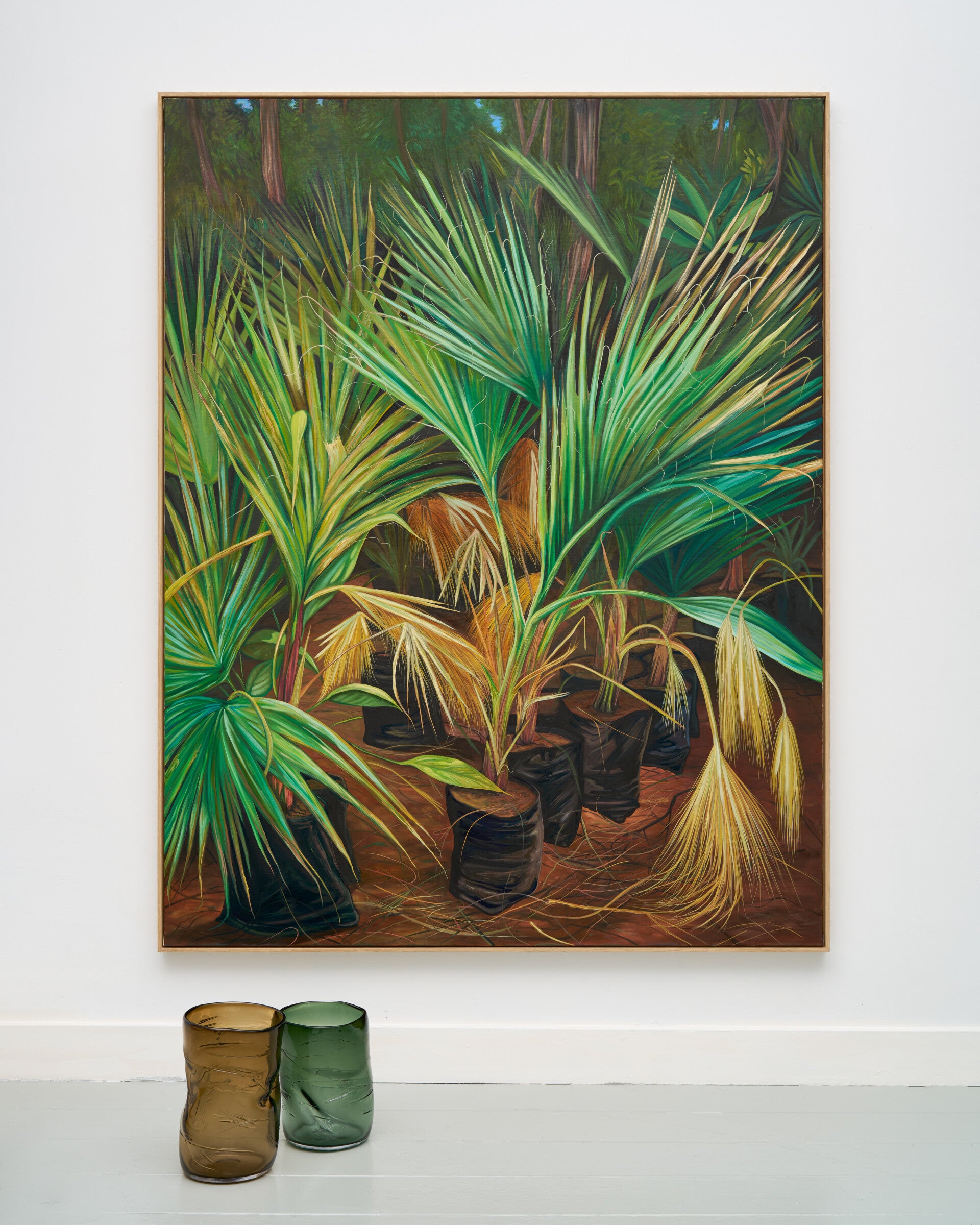
Monoculture Plantations of Coconut (2026) Oil on linen, 180 × 140 cm
Cultivated Wilderness is a presentation and research project developed within the broader conceptual framework of Domesticated Biological Systems. The project investigates the semi-natural relationships that emerge within monoculture plantations situated in or adjacent to rainforest ecosystems. Through this research, I examine how these contemporary domesticated understoreys redefine our perception of the artificial jungle and how the role of humanity within these landscapes is continuously reconstructed. What we commonly recognize today as "nature" is often a cultivated and carefully controlled system in which the boundary between the wild and the manufactured becomes increasingly blurred.
My practice is rooted in an anthropological perspective that reflects on the relationships between ritual, ecology, and collective memory. I am interested in knowledge systems that understand nature as a living, spiritual entity, where materials, gestures, and objects carry meanings that extend beyond their physical existence. At the same time, I critically investigate how contemporary interventions—such as deforestation, monoculture, and greenwashing—disrupt these relationships. This tension between spiritual cosmologies and ecological realities forms the foundation of my work.
These paintings approach ecological landscapes as contemporary crime scenes. They weave together traces of damaged ecosystems with natural elements, creating connections between the myths we construct around biological resilience and the ways collective meaning is produced. Fragmented landscapes emerge as visual testimonies of environmental degradation and fabricated ecological narratives, inviting viewers into immersive environments where beauty and violence coexist.
I regard contemporary ecological landscapes—such as monoculture plantations often presented as sustainable solutions—as carefully constructed realities. While they are frequently framed through the language of sustainability, these systems primarily serve economic interests, with ecological balance becoming secondary. In many cases, the soil has been so severely degraded that natural regeneration is no longer possible. I therefore understand these landscapes as sites of evidence—ecological crime scenes—where hidden structures of extraction, violence, and exploitation reveal themselves beneath the aesthetics of sustainability.

Nursery Cultivation Bags I (2026) Blown glass, 32 × 18 × 18 cm
Nursery Cultivation Bags II (2026) Blown glass, 28 × 18 × 18 cm
Nursery Cultivation Bags forms an essential part of my ongoing research into the domestication of artificial agricultural systems. Nursery bags are designed to nurture and protect young plants, yet they also facilitate the large-scale expansion of monoculture plantations. As such, they embody the tension between care and extraction, cultivation and exploitation.
By recreating these disposable plastic objects in blown glass, I transform an overlooked agricultural tool into a fragile and enduring monument. The material introduces a hauntological presence: something simultaneously delicate and permanent, absent yet lingering. The sculptures reveal how infrastructures of cultivation quietly shape contemporary landscapes, exposing the hidden relationship between the commodification of natural resources and the construction of landscapes that are presented as "natural."

Exhibition view at Josilda da Conceição Gallery. Presented as part of the group exhibition Colluding Paradox (2026).

Monoculture Plantations of Bananas (2026), oil on linen, 110 × 80 cm

Overview artwork on NAP+ 2026 with Josilda da Conceição Gallery. Nursery Cultivation Bags — available in various sizes (S–M–L), ranging from 30 × 15 cm to 45 × 15 cm. Blown and carved glasswork.