Commodity of Natural Resources (2026 -2027)
Keywords: Ritual Economy, Circulation of Natural Resources, Healing of Material Culture & Sacred Commodification
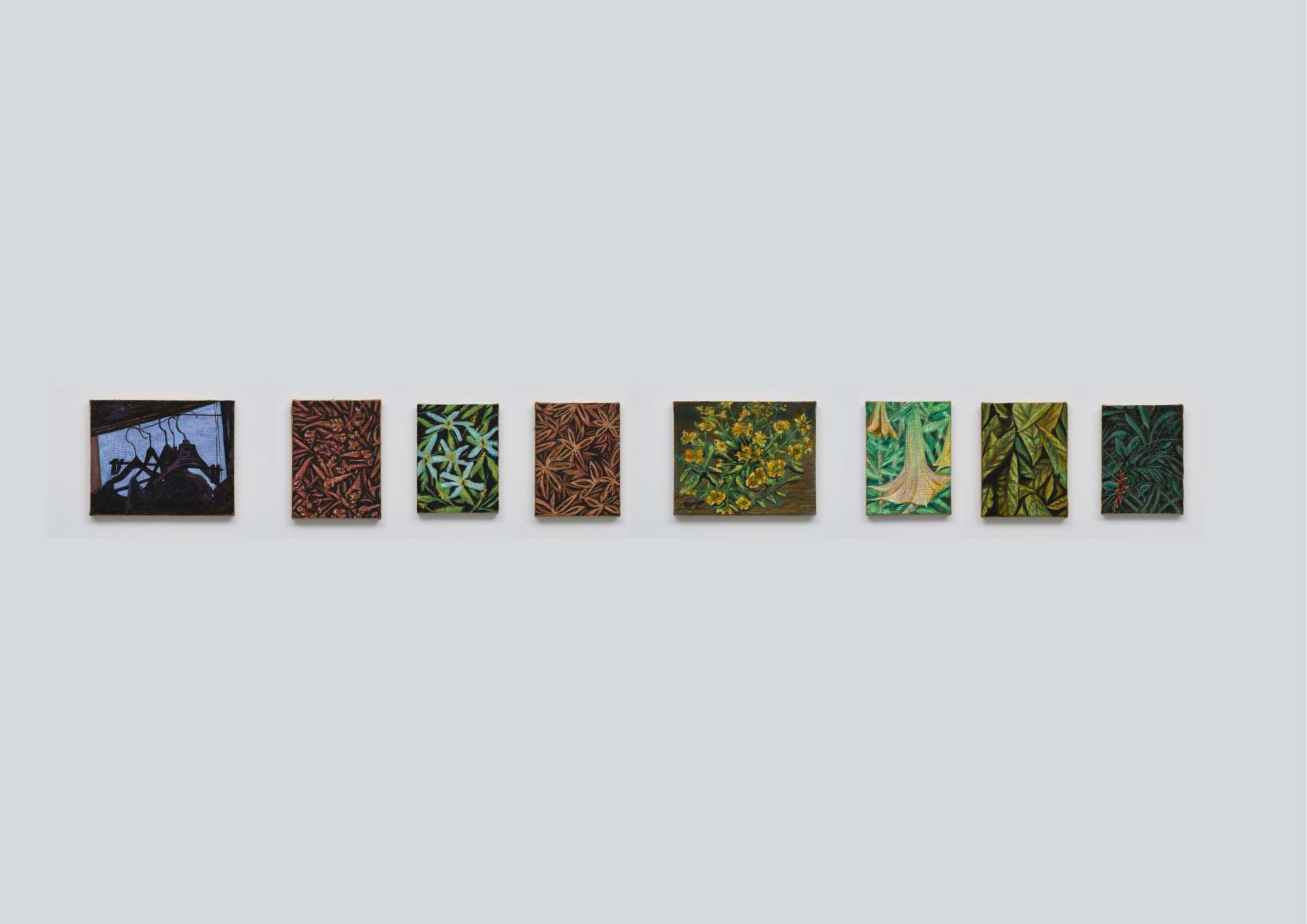
Installation view of Commodity of Natural Resources, featuring 25 oil paintings on raw jute (24 × 18 cm and 24 × 30 cm). Exhibition at Josilda da Conceição Gallery, 2026.
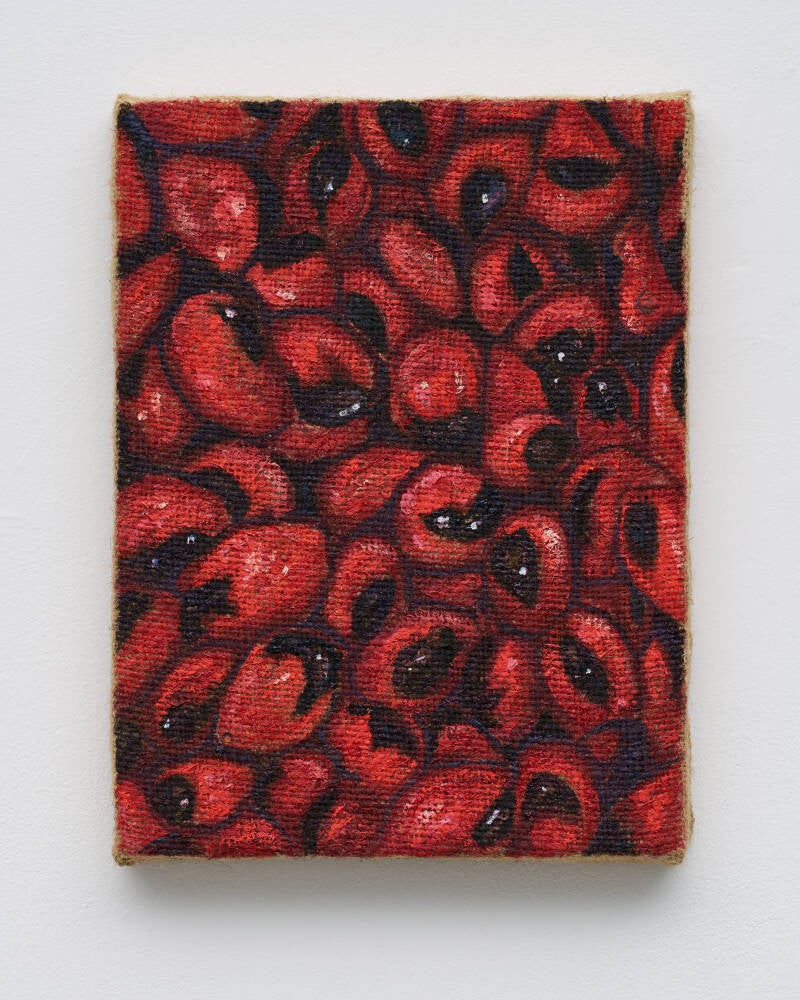
Commodity of Natural Resources - Huayruro (2026) - Oil on jute, 24 x 18 cm
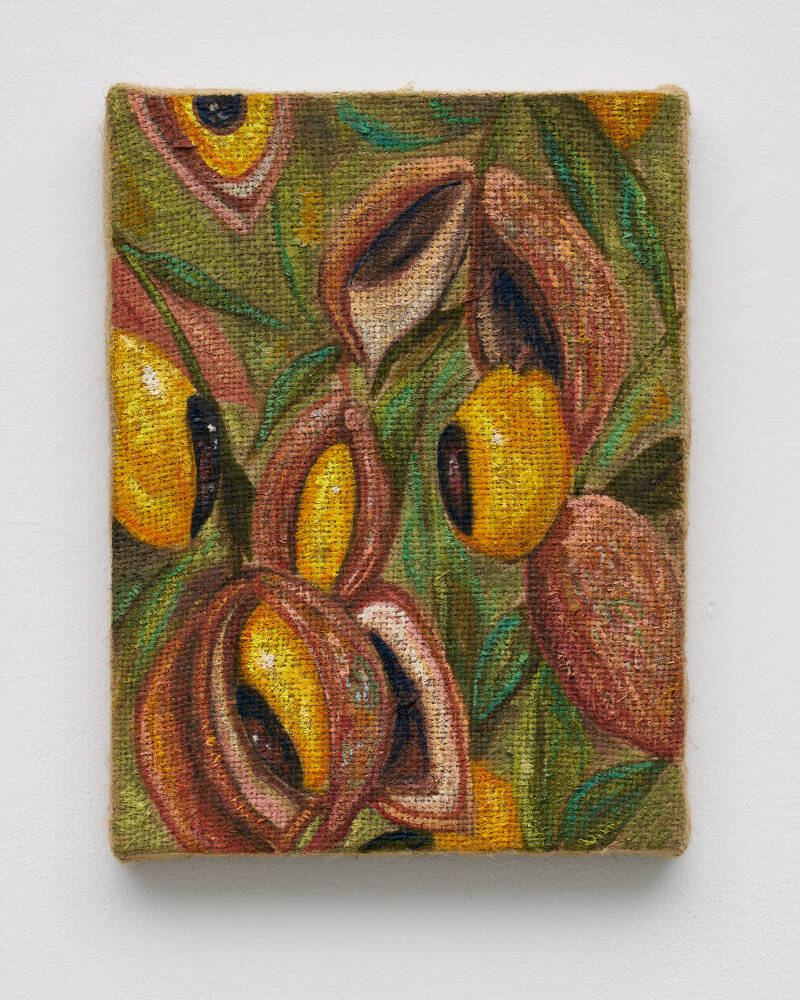
Commodity of Natural Resources - Copaiba (2026) - Oil on jute, 24 x 18 cm
My paintings investigate the transformation of nature into commodity, focusing on flowers, seeds, medicinal plants, and the rural biodiversity of the Amazon. These living organisms are not approached merely as botanical specimens or economic resources, but as carriers of ancestral knowledge, ecological memory, and cultural identity. Within many Indigenous cosmologies, plants exist as active participants in complex systems of reciprocity, healing, and spiritual relationships rather than as objects of extraction. My work explores the tension between these holistic worldviews and the global economic structures that reduce biodiversity to market value, intellectual property, or industrial raw material.
The paintings draw upon Indigenous knowledge systems in which medicinal plants, seeds, and forest ecologies form interconnected networks that sustain both human and non-human life. These systems challenge Western notions of ownership and productivity by emphasizing stewardship, collective memory, and interdependence. As traditional ecological knowledge increasingly becomes the subject of commercial exploitation—from pharmaceuticals to agribusiness—my work questions who benefits from these processes and what forms of knowledge are erased or appropriated in the transition from forest to commodity.
By bringing together botanical imagery, Indigenous epistemologies is central to this investigation. Each painting is created on raw jute fabric, a coarse agricultural textile historically associated with the global circulation of commodities such as coffee, cacao, spices, grains, and other colonial trade goods. The untreated jute functions not only as a support but also as a conceptual element, carrying within its fibres the histories of labour, extraction, migration, and commerce. Its porous surface evokes both the fragility of ecological systems and the enduring material traces of colonial economies and the material language of jute, the paintings become sites where ecological, political, and historical narratives intersect. They invite viewers to reconsider the value of natural resources beyond economic frameworks and to reflect on alternative ways of relating to landscapes grounded in care, reciprocity, and coexistence rather than extraction and profit.
Develops from an ongoing research into the circulation of natural materials, focusing on the historical and contemporary movement of flowers used in medicinal practices and bodily rituals. The project examines how flowers—transported in jute bags across local and transnational routes—transform in meaning as they shift between spiritual, therapeutic, and economic systems.
Drawing from ethnobotany, trade histories, and ritual studies, the research considers flowers not only as organic matter, but as symbolic carriers of healing, protection, and cultural memory. Particular attention is given to informal economies and traditional markets, where natural resources circulate as both commodities and vessels of inherited knowledge.
Through repetition in painting and the recurring presence of the jute bag as both sculptural motif and symbolic container, the work reflects on processes of preservation, displacement, and exchange. The series questions when and how sacred materials become commercial goods, and whether ritual value can coexist with market logic.
By translating research into painterly compositions, the project connects material investigation with visual language, positioning flowers as active agents within broader systems of care, spirituality, and global trade.
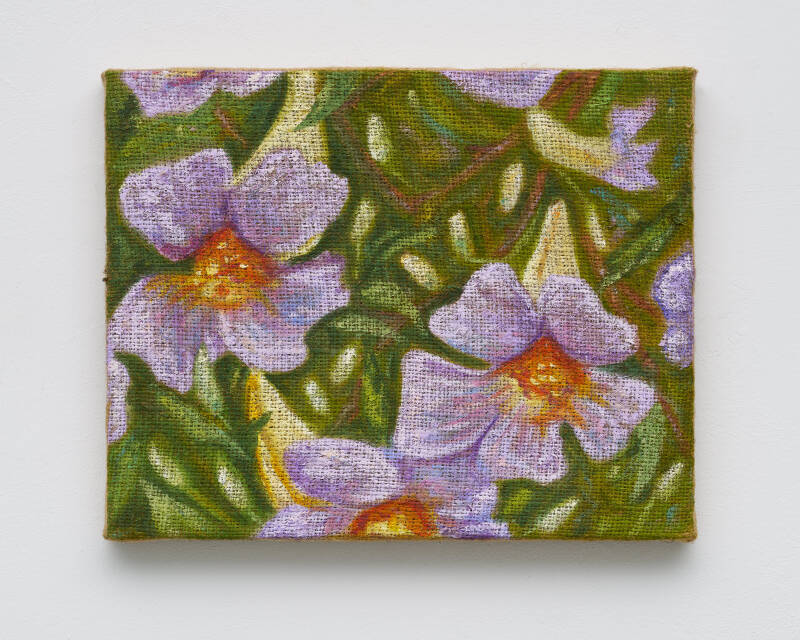
Commodity of Natural Resources - Thumbergia (2026) Oil on jute, 24 x 30 cm
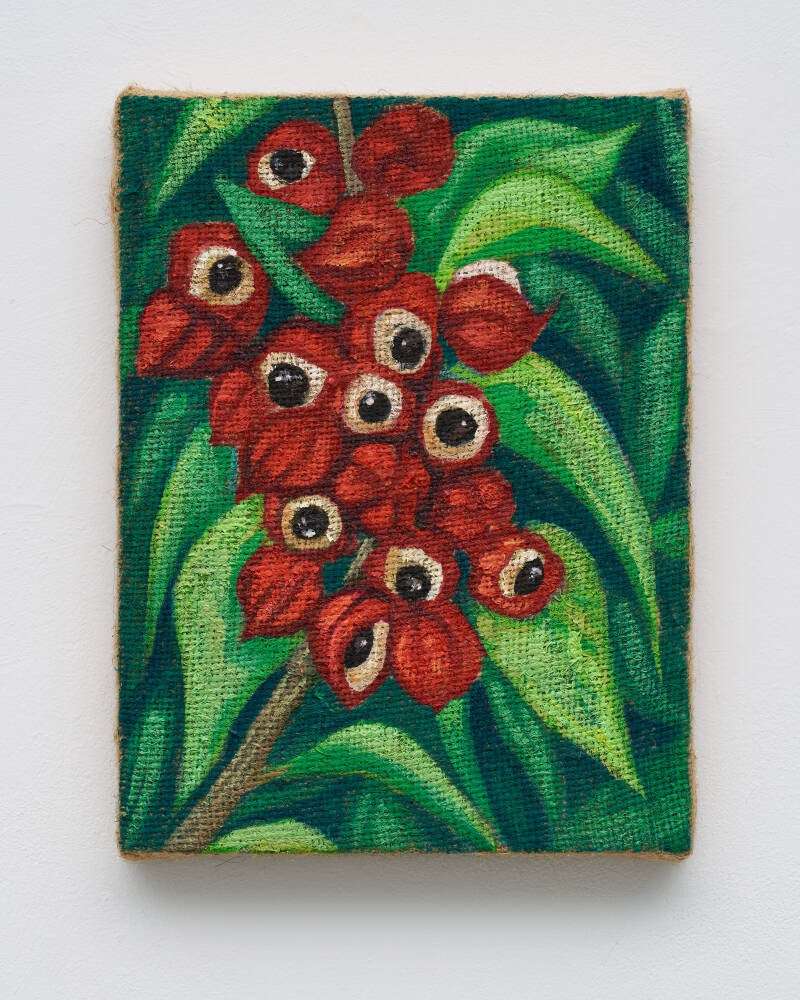
Commodity of Natural Resources - Guarana (2026) - Oil on jute, 24 x 18 cm
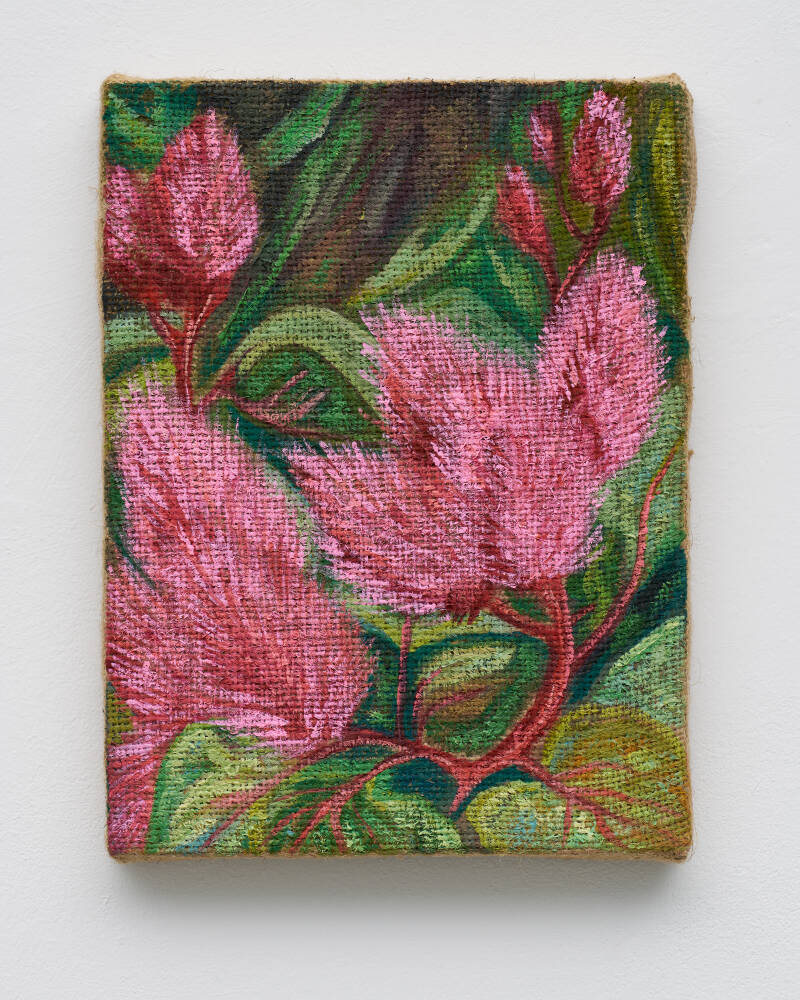
Commodity of Natural Resources - Achiote (2026) - Oil on jute, 24 x 18 cm

Commodity of Natural Resources - Ruda silvestre (2026) Oil on jute, 24 x 30 cm
Ruda is widely used in homeopathic and traditional medicine. It is known for helping treat varicose veins, intestinal parasites, and menstrual pain, as it can act on blood vessels and has healing, antiparasitic, and analgesic properties, offering various health benefits.
Ruda is most commonly used in the form of tea, which can be prepared from fresh or dried leaves and flowers. This tea may be consumed or applied externally to cleanse the eyes, skin, or hair.
It can also be used as a poultice. To prepare it, two tablespoons of fresh rue leaves are crushed into a paste and applied directly to the affected area. This method is traditionally used to relieve rheumatic pain, treat varicose veins, and support wound healing.

Commodity of Natural Resources -Mandevilla (2026) — Oil on jute, 24 × 18 cm

Commodity of Natural Resources -Hojas de Coca (2026) — Oil on jute canvas, 24 × 18 cm

Overview shot of the exhibition Airtropology: The Space Between Us, Josilda da Conceição Gallery, 2026

Commodity of Natural Resources - Copa de oro, (2026) - Oil on jute, 20 x 20 cm

Commodity of Natural Resources - Floripondio Blanco (2026) - Oil on jute, 24 x 18 cm
private collection
Floripondio Blanco is a potent flower recognized for its toxic qualities, yet within certain Indigenous traditions it has been used with great care and specialized knowledge. When prepared correctly and administered within a guided ritual context, it is believed to open spiritual gateways and shift perception. In some traditional practices, it has also been used in remedies related to respiratory conditions, such as asthma.
Rather than existing as a simple medicinal plant, Floripondio Blanco belongs to a complex system of ancestral healing in which dosage, intention, and ritual structure are essential. Its significance extends beyond its physical properties, reflecting a worldview in which plants function as spiritual mediators embedded in cosmology, embodied knowledge, and collective memory.

Commodity of Natural Resources - Pico de Loro (2026) - Oil on jute, 24 x 18 cm
Pico de Loro is known as a plant connected to traditional medicinal practices and healing knowledge, located deep within the Amazon jungle. For generations, Indigenous communities have used local plants for bodily rituals, protection, and spiritual care, embedding botanical knowledge within systems of ancestry and land stewardship.
Over time, certain plants associated with this region have been extracted, transported, and reframed through colonial systems of trade and exotification. What once functioned within intimate, community-based healing practices became recontextualized as an “exotic” commodity for external consumption. This shift reveals how Indigenous knowledge and natural resources are often domesticated, renamed, and commercialized, detached from their original cultural and spiritual frameworks.

Commodity of Natural Resources - Anís Estrellado (2026) — Oil on jute, 24 × 18 cm

Commodity of Natural Resources - Clavo de Olor (2026) — Oil on jute, 24 × 18 cm
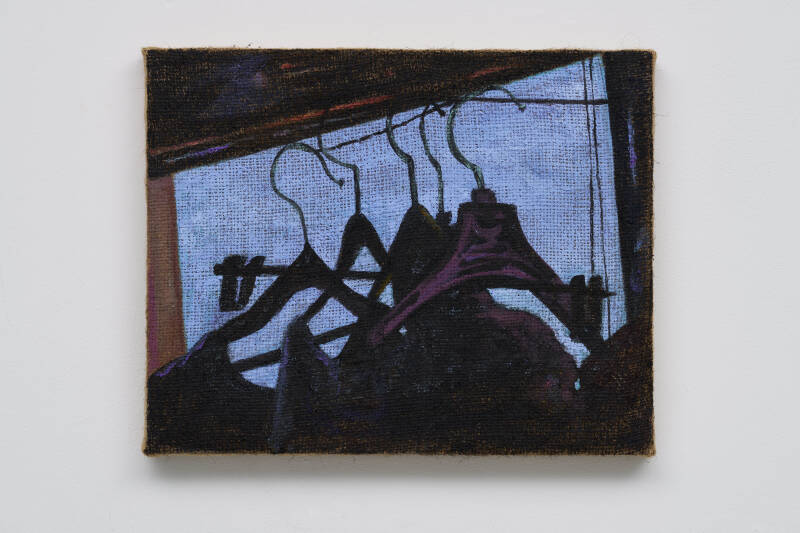
Tendedero (2026) Oil on jute, 24 x 30 cm
private collection
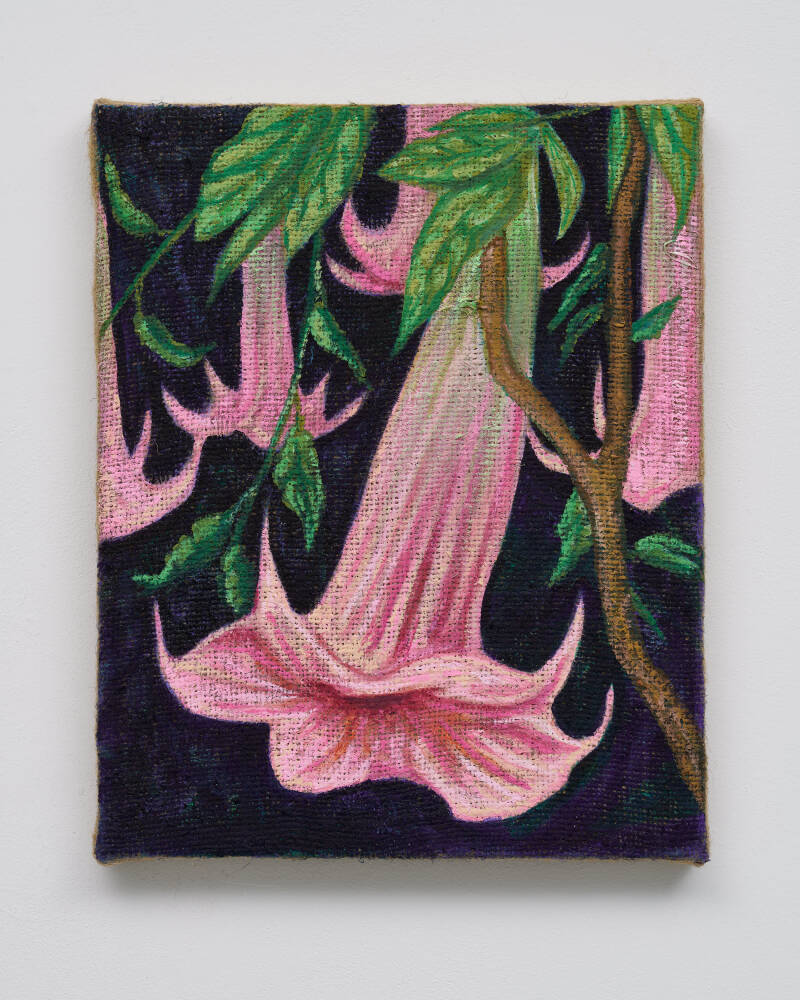
Commodity of Natural Resources - Floripondio Rosa (2026) Oil on jute, 30 x 24 cm
private collection